Historical regime
This is a historical regime that no longer exists.
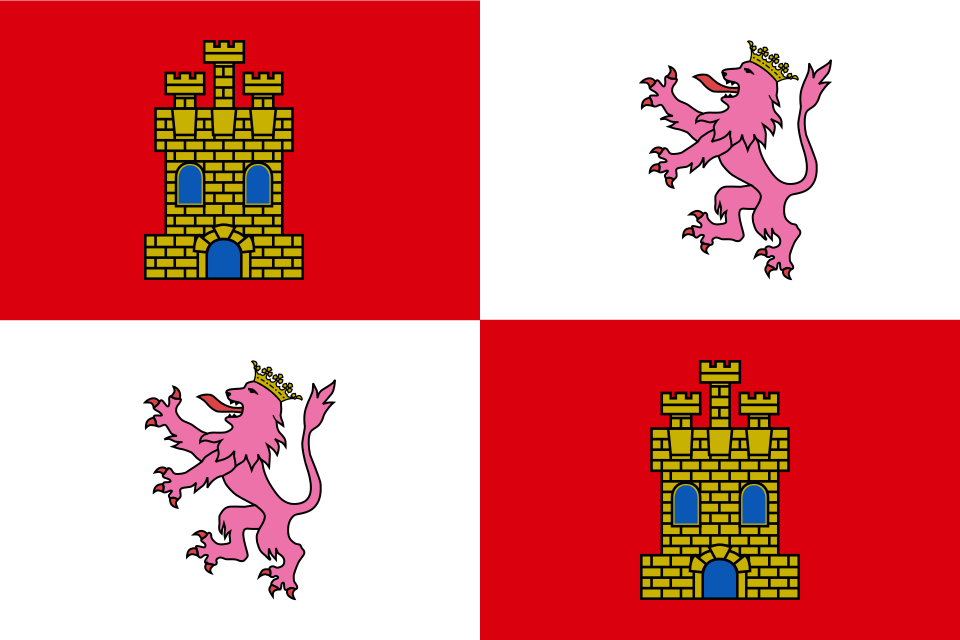
Kingdom of Castile
1230–1715
United with León in 1230, Castile expanded across Iberia and later the Americas. The Crown, nobility, and Catholic Church shaped its politics; institutions changed over the nearly five centuries covered here.
Profile across the 12 axes
These are model estimates of this political system, not the average views of its residents. Each value is a percentage toward the named pole, not an accuracy rating.
Structure
What this axis means
Measures whether you prefer power distributed among states, cities, and local communities or a unitary national state with more uniform laws and command.
Representation
What this axis means
Compares trust in elections, opposition, and democratic institutions with a preference for strong leadership, technocracy, monarchy, or authoritarian regimes.
Power
What this axis means
Evaluates the balance between order, surveillance, punishment, and state control versus privacy, individual freedom, and civil autonomy.
Immigration
What this axis means
Looks at whether you value cultural assimilation, language, and national identity or multiculturalism, open migration, and plurality of customs.
Diplomacy
What this axis means
Analyzes your position on armed forces, weapons, deterrence, and military intervention in contrast with negotiation, pacifism, and international organizations.
Intervention
What this axis means
Measures the leaning between external non-interventionism and more assertive national sovereignty, geopolitical nationalism, and active defense of national interests.
Economy
What this axis means
Compares a preference for public ownership, state companies, and collective services with private property, privatization, and business leadership.
Control
What this axis means
Evaluates state planning, regulation, and active economic policy against free markets, low interference, monetary autonomy, and competition.
Trade
What this axis means
Measures protectionism, productive sovereignty, and defense of national industry against globalism, free trade, and international economic integration.
Religion
What this axis means
Compares secularism, separation of religion and state, and criticism of religious privileges with the public influence of faith and religious values.
Morality
What this axis means
Evaluates cultural progressivism, civil rights, and social change in contrast with tradition, family, customs, and moral conservatism.
Technology
What this axis means
Measures enthusiasm for technology, AI, genetic engineering, and technical development against biological, environmental, and preservationist caution.
Score date unknown. The original entry provides no references.
Similar political profiles
Calculated with the same equal-weight, 12-axis Manhattan distance as our test. These reference scores may differ from the source site and are not a scientific assessment or relocation advice.